Connect. Learn. Grow with the Nutanix Community.
Recently active
In this series, we’ve learned Nutanix provides more usable Capacity along with greater capacity efficiency, flexibility, resiliency and performance when using Deduplication & Compression as well as Erasure Coding. We’ve also learned Nutanix provides far easier and superior storage scalability and greatly reduces the impact from Drive failures. We then switched gears and covered heterogeneous cluster support and learned how critical this is to an HCI platform’s ability to scale and deliver a strong ROI without rip and replace or the creation of silos. In this part of the blog series, we cover each product’s I/O Path for write operations with mirroring (a.k.a FTT1 for vSAN and RF2 for Nutanix). I will be publishing a separate detailed comparison between deploying software-defined storage “In-Kernel” vs “Controller VM”, this post will focus on how the traffic traverses and utilises the cluster. Let’s assume a brand new 4 node cluster for both vSAN and Nutanix ADSF and a single VM with
In this series, we’ve learned Nutanix provides more usable Capacity along with greater capacity efficiency, flexibility, resiliency and performance when using Deduplication & Compression as well as Erasure Coding. We’ve also learned Nutanix provides far easier and superior storage scalability and has greatly reduce impact from Drive failures. In this part, we cover heterogeneous cluster support as this is critical to an HCI platform's ability to scale and ensure ever changing customer requirements are being met/exceeded. Hardware capacity/performance continues to advance at a great pace if customers are forced to use uniform (homogeneous) clusters it will likely result in a higher TCO and slower ROI. That’s bad enough but it also means customers will not get to take advantage of the performance and density advantages of newer hardware without creating silos which lead to more inefficiency. After all we don’t want to be in the same position where we need to “rip and replace” hardwar
In the first post in this series, I compared the actual Usable Capacity between Nutanix ADSF vs VMware vSAN on the same hardware. We saw approximately 30-40% more usable capacity delivered by Nutanix. Next, we compared Deduplication & Compression technologies where we learned Nutanix has outright capacity efficiency, flexibility, resiliency and performance advantages over vSAN. Then we looked at Erasure Coding where we learned the Nutanix implementation (called EC-X) is both dynamic & flexible by balancing performance and capacity efficiencies in real-time. vSAN, on the other hand, has a rudimentary “All or nothing” approach which can lead to higher front end impact and does not dynamically apply Erasure Coding to the most suitable data. Now let’s learn how both platforms can scale storage capacity: Here we see from a typical “tick-box” comparison that both platforms can add individual drives or additional nodes to scale capacity. As you’ve probably gathered from my previous f
In part 1 of Deduplication & Compression Comparison – Nutanix ADSF vs VMware vSAN, we talked about data reduction/efficiency technologies which apply further storage capacity efficiencies to the usable capacity. In part 2, we’ll look deeper at how, when and where the data reduction takes place. The following table shows the storage tiers the data reduction technologies are supported for both products: vSAN data reduction technologies are NOT applied in the high performance “cache” tier whereas they are with Nutanix where in-line compression for writes is on by default and Deduplication is supported. With vSAN, Deduplication and Compression are only applied once the data is cold and de-staged to the capacity tier. Going back to the reference I made earlier that VMware has consistently been saying that they do not support data reduction on hybrid intentionally for performance reasons. It begs the question then why they do not apply these valuable technologies to their “all-flash” cac
In a recent post, I compared the actual Usable Capacity between Nutanix ADSF vs VMware vSAN on the same hardware. We saw approximately 30-40% more usable capacity delivered by Nutanix. Next up we compared Deduplication & Compression technologies where we learned Nutanix has outright capacity efficiency, flexibility, resiliency and performance advantages over vSAN. Now we’ll look into Erasure Coding which is another valuable and proven technology that can drive further capacity and potentially performance efficiencies, complimentary to Deduplication and Compression. As I’ve highlighted in the previous articles, “Tick-Box” style slides commonly lead to incorrect assumptions for critical architectural/sizing considerations such as capacity, resiliency and performance. This problem is also applicable to Erasure Coding, Let me give you a simple example: The above table shows Erasure Coding / RAID 5&6 are supported by Nutanix and VMware vSAN. With this information, customers/partners
In a recent post, I compared the actual Usable Capacity between Nutanix ADSF vs VMware vSAN on the same hardware and we saw approx 30-40% more usable capacity delivered by Nutanix. The next logical step is to compare data reduction/efficiency technologies that apply further storage capacity efficiencies to the usable capacity. In the previous post, I declared “a wash” between the two products for the sake of simplifying the usable capacity comparison. However, the reality is it’s not a wash as the Nutanix platform has the ability to deliver more usable capacity from the same HW. Combine that with a superior storage layer in the form of the Acropolis Distributed Storage Fabric (ADSF) which compliments data reduction technologies, vSAN is bringing a spoon to a gunfight. In this post, we’ll look at Deduplication and Compression. Data reduction technologies such as Compression, Deduplication are proven technologies that provide varying levels of value to customers depending on their datase
When considering Hyper-converged (HCI) products, often vendors, partners, value-added resellers & customers compare multiple solutions which of course makes perfect sense. During these comparisons, marketing material, in many cases “Tick-Box” style slides being compared and worse still being taken on face value which can lead to incorrect assumptions for critical architectural/sizing considerations such as capacity, resiliency and performance. Let me give you a simple example: A customer chooses/needs 16 nodes to meet their requirements and they choose the most popular form factor being a 4 node per 2 rack unit (4N2U) for the density, power efficiency and high performance. The nodes are populated with 6 x 1.92TB drives (All-Flash) as the cost of flash was justified for their use case/s. So we’re left with 16 hosts * 6 drives = 96 total drives 96 x 1.92TB drives with a formatted capacity of ~ 1.78TB = 170.88TB Then the customer compares vSAN and Nutanix which both use replication as
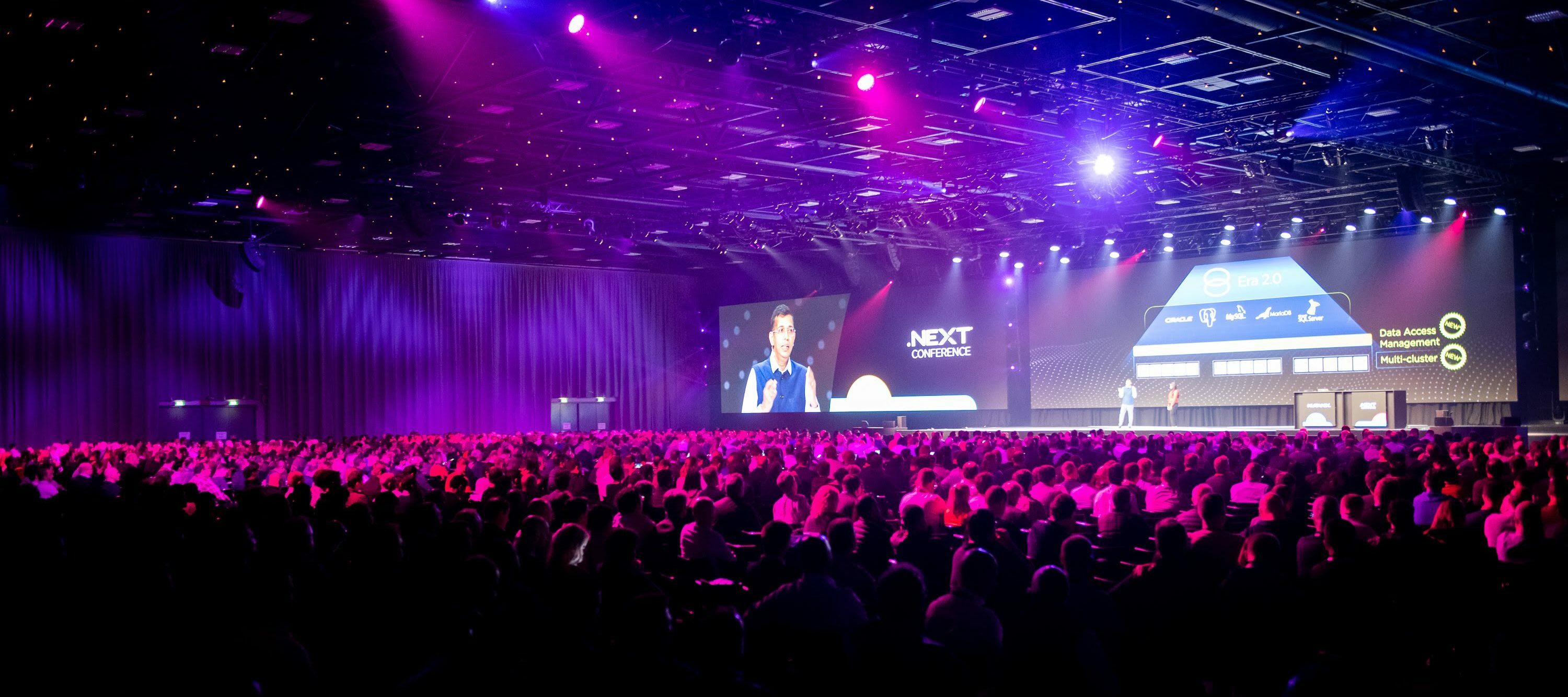
To fully experience a conference is to get immersed in it, and one way to do this is to be a speaker. This is a great way to build your personal brand and get out of your comfort zone and share with the community the cool things you have been able to achieve. Show your passion for solving IT bottlenecks to the world! We are looking for industry go-getters to speak at our upcoming .NEXT conference in Chicago and we think you’d be the perfect fit for one of our speakers! Take center stage and build up your brand by leading your very own session at one of the world’s leading tech conferences. If selected you will have a 30-minute session dedicated to the topic of your choice during the main event AND you will also receive: A complimentary conference pass 2 nights hotel accommodation in Chicago covered by Nutanix A session owner to guide you through the process Professional speaker coaching from our award winning coach Feedback on presentation content Professional services for Powerpoint
This post was authored by Gabe Contreras, Enterprise Architect Nutanix When discussing big data architectures, we are talking about how data is taken in, processed and consumed. This constitutes your big data pipeline. The architecture can vary greatly. For instance, take one of the most common architectures with Lambda, you have a speed processing and batch processing sides. Speed processing is more real time analytics and querying. Batch processing takes longer and is normally done at scheduled times for taking a deeper look over a longer period of time. The components to build this vary greatly, it can be a choose your own adventure book with how you build your pipeline. Some of the components used are Kafka, Hadoop, Spark, Elasticsearch and Cassandra. All of these systems have one main thing in common, they are highly scalable. These components can grow in size as your needs grow to be able to handle large data flows. This scalable nature is what also makes Nutanix Enterpri
This post was authored by Mike McGhee Technical Marketing Engineer at Nutanix The Ever-Expanding Universe of DataFrom enterprise applications to the internet of things (IoT), the number of connected devices which produce data is growing at a staggering rate. Business Insider forecasts that by 2020 more than 24 billion internet-connected devices will be installed around the globe [1]. It’s no wonder analysts from IDC predict that by 2025 the world will produce 175 zettabytes of data, a tenfold increase from what was generated in 2016 [2]. The vast majority of this data is forecast to be unstructured. While much of this unstructured data will reside within Object Storage based services, a large amount, and likely the most actively accessed, will reside in network attached storage (NAS) leveraging the SMB and NFS protocols within datacenters. Traditional systems with their inherent limits on managing unstructured data at scale will be unable to handle the coming data explosion.
This post was authored by Saad Azam Education & Community Marketing Specialist at Nutanix. We have finally come out with What’s New in AOS 5.16! You can use this course to help you learn about all the features and get up to speed fast with everything AOS 5.16. This short online training covers advanced features found in AOS 5.16 including storage capacity, data protection, security, cluster lifecycle management, and much more! The NEW features discussed in this course are: Secure Boot Support for VMs, and Nodes running AHV Upgrading AHV Hosts using Life Cycle Manager (LCM) We look forward to seeing you explore the different lessons and areas that are of significance to you. Get started here! ©️ 2020 Nutanix, Inc. All rights reserved. Nutanix, the Nutanix logo and all Nutanix product and service names mentioned herein are registered trademarks or trademarks of Nutanix, Inc. in the United States and other countries. All other brand names mentioned herein are for identification p
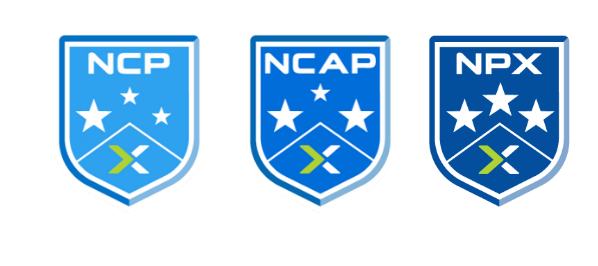
This post was authored by Jill Liles Sr Marketing Manager at Nutanix.We want to let you know about an exciting addition to the Nutanix Certification program: digital badges and improved certificates. Digital BadgesWe have partnered with Credly to use their Acclaim platform to distribute digital versions of all your Nutanix certifications. Digital Badges provide information describing your qualifications and the steps you completed to earn your certification.There is no cost for using a Digital Badge, it’s simply another way to share your achievement with the world. BenefitsEach digital badge you earn comes with these benefits:Social Sharing – Share your accomplishment on social platforms including LinkedIn, Twitter, Facebook, and Xing. Logo – Download the logo representing your certification/badge for use in e-mail signatures or other representation outside of social media. Printable Certificates – Print out your certificate, which has been newly redesigned to be more visually appealin
This post was authored by Lauren Willard Nutanix We already know that Nutanix built hyperconverged infrastructure (HCI) to solve datacenter complexity issues. But you may not be aware that we also have our own virtualization offering, AHV (it’s not an acronym, I checked). AHV was created to further reduce complexity issues around virtualization and HCI. It’s the answer to merging and converging virtualization and is a crucial part of HCI. You can either bolt on a hypervisor or choose to have it integrated and built into your HCI product to gain additional benefits without the extra cost and time it takes to add it to your infrastructure. Integrating virtualization into HCI infrastructure allows you to be more application focused making your infrastructure more service-based. What are you paying for? While you can use other virtualization solutions with our HCI, you may be paying for it unnecessarily. Nutanix includes a license to use AHV on our HCI platform at no additional cost,
This post was authored by Jill Liles Connected Customer Experience Manager at Nutanix.The Nutanix Certification team is thrilled to let you know about our new exam delivery platform, available today!This new platform offers streamlined enrollment and registration, while maintaining exam security and the flexibility of remote delivery. The new platform will also provide faster exam results – you’ll know your certification status immediately. Download step by step registration instructions here.What’s new:Exam Scheduling: The new system has you schedule your exam time in advance, which lets you plan your time and study schedule. Of course, we know things change, so rescheduling is simple too. Self Service Exam Registration: Simply log into your Nutanix Education account and click on the “Take an Exam” link. Select the exam you want to take and you’ll be automatically transferred to the new platform to finish registering. Immediate Results: Because the exam is proctored in real-time you n
This post was authored by Luke Congdon, Sr. Manager, Product Management for AHV Keep database licensing under control by combining strong storage policies with AHV auditing In the early years of my career in enterprise software, I often heard that downtime of servers, networks, and components was undesirable, but the fidelity of your data was mission critical. Most things can be restarted or fixed, but lost data might remain lost forever. It’s a real concern when you run a mission-critical workload that might be responsible for making your end of year financial sales, or a workload who’s resulting work could impact lives. It’s no surprise then, that databases are critical components of any stateful computer architecture. Databases and database management systems have a long history and come in many generations and vendors. By the 1990s, relational databases (RDBMS) became very popular. Despite newer NoSQL databases having come to market in the 2000s, relational databases are
This post was authored by Jill Liles Connected Customer Experience Manager at Nutanix. The brand new Nutanix Enterprise Cloud Solutions online training series introduces you to the fundamental building blocks of the Nutanix Enterprise Cloud. Each course consists of two parts: A deep dive into the product themselves, through videos exploring these core components See how we tie them together to help you solve your business needs Four courses are currently available, and our curriculum team is hard at work building out even more: Hyperconverged Infrastructure (HCI) - If you're new to hyperconvergence and/or the Enterprise Cloud, start here. You'll learn about AOS, AHV, and Prism - the cornerstone of everything we've built at Nutanix. Security and Governance – By adding Nutanix Flow and Nutanix Beam to your core understanding, you’ll see what these products do and how they form a true Security and Governance solution. End-User Computing - Build on your core knowledge Nutanix by discov
This post was authored by Jill Liles Connected Customer Experience Manager at Nutanix. On-prem vs. cloud. Public vs. private. 3-tier vs. hyperconverged. Computing choices have come a long way since IBM released the first commercial mainframes back in the day. Join us as we take a look at the mile markers of our ever-evolving industry – from ENIAC and servers, to datacenters, web-scale infrastructure, and the cloud. Welcome to the Fundamentals of the Enterprise Cloud, perhaps one of the most interesting technology stories of our times. Click here to get started. ©️ 2020 Nutanix, Inc. All rights reserved. Nutanix, the Nutanix logo and all Nutanix product and service names mentioned herein are registered trademarks or trademarks of Nutanix, Inc. in the United States and other countries. All other brand names mentioned herein are for identification purposes only and may be the trademarks of their respective holder(s). This post may contain links to external websites that are not
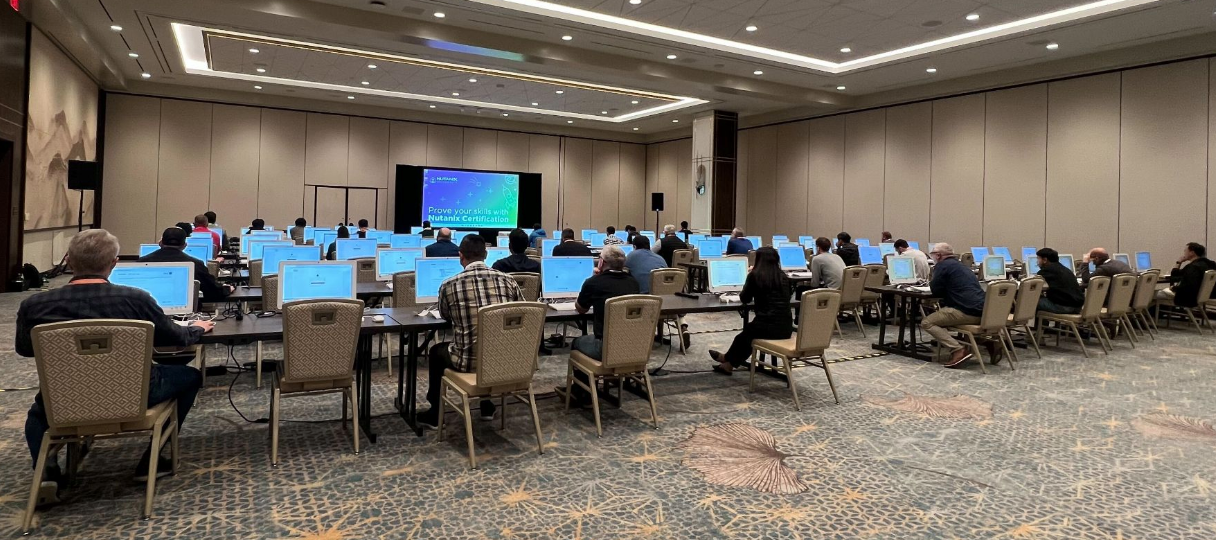
This post was authored by Saad Azam Education & Community Marketing Specialist at Nutanix. Help build the future NCAP! The Nutanix Certification team has been busy developing an update for the Nutanix Certified Advanced Professional (NCAP) program to cover AOS 5.10 – and it’s now ready for beta testing at no charge. But there is a catch – the beta exam is only open to the first 100 people to complete it. After that, we’ll pull the results and begin working towards the live exam. Beta testers are also a critical part of the exam development process, and Nutanix is one of the few companies to open this process to the public. We hope you’ll take part and support the program’s success. To get started, Review the exam blueprint guide Register just like you would any other exam Enter discount code W5C3U2XT at check out to remove the exam fee Frequently asked questions How do Beta Exams differ from Live Exams? Beta exams are a little different from a fully live (or GA) exam, in a couple
This post was authored by Laura Jordana, Technical Marketing Engineer, Nutanix We are excited to announce the release of our new and improved Nutanix Test Drive, running on Google Cloud Platform! Nutanix Test Drive History For the past couple of years, we have offered the capability for customers and prospects to try out a Nutanix instance directly from their web browser. The original offering was a cloud-based version of Nutanix Community Edition (CE). In early 2019, we were able to deploy the full-blown Nutanix AOS software in the cloud and enhanced the experience by incorporating a couple of guided demos on how to create a storage container and a VM on a fully functional, live system. It was a way to get a feel for what Nutanix had to offer, but by no means did it do justice to the full functionality of our solutions. Test Drive 2.0 With Test Drive 2.0, we wanted to start expanding the offerings to showcase more of the solution portfolio. The initial release allows users to explore
What a great way to start the new decade, here are your 2020 Nutanix Technology Champions (NTC). This group of IT professionals, are from every cloud, application and technology group. Their diverse backgrounds, experiences, and expertise help their organizations and the virtualization community to challenge the status quo. Last year we introduced the NTC Elite designation and this year I am excited to add one more person to that list. The power of mentoring and encouraging others to strive for more is what being part of a community is all about. NTC Elite is for those that have also earned their NPX designation. This past year has been opportunity for us to see other grow, learn and get out of their comfort zone. From blogging, running user groups and being fully immersed in our .NEXT conference experience. I'm looking forward to another exciting year and learning from many of you. Take the time to get to know one another and congratulate each other on social media, use the hash
This post was authored by Yashesh Mankad, Staff Engineer Nutanix Nutanix Era is a suite of software that automates and simplifies database management, bringing one-click simplicity to database provisioning and life cycle management (LCM), copy data management (CDM), and database backups. Era also provides simplicity in tracking and limiting access to databases and their copies through a sophisticated role-based access control (RBAC) mechanism. While Era does not access any data in a customer's databases, it does maintain metadata about those databases and virtual machines, including the database name, size, access credentials, version, and configuration details. Additionally, it maintains metadata about entities like databases, clones, time machines, backups, and so on to help manage the database estate. Era stores all of this metadata in its repository, which is powered by Postgres. Repository Clustering By default, Era's repository runs on a single-instance Postgres database. Custom
This post was authored by Saad Azam Education & Community Marketing Specialist at Nutanix. As many of you already know, we have partnered with Credly to use their Acclaim platform to deliver digital badges for Nutanix Certifications. These badges provide information about your qualifications and are an easy way to share the investment you’ve made in your own professional growth. But did you know you can use these badges to find your dream job from the Labor Market Insights data? What are Labor Market Insights? Labor Market Insights is a neat area on the Acclaim platform that helps you find career opportunities. You can filter by job title, location, employer, and even salary range. All the job postings on the platform are active, as data is updated 24/7. The screenshots below walk you through the two ways to find relevant jobs: Search by badge Search by skill tag Accessing Labor Market Insights Go to your profile page on Acclaim. Click on one of your badges and
Updated: April 9, 2025Certify after Nutanix TrainingOur Exam Preparation classes help you get ready for your certification exam by reviewing key exam topics and answering practice questions. They are offered in Instructor-Led Training (ILT) and On Demand formats and include an exam voucher.NCA Exam Prep On Demand NCP-MCI Exam Prep On Demand NCP-MCI Exam Prep ILTOur Instructor-Led product training classes also include an exam voucher for the associated certification.Nutanix Hybrid Cloud Fundamentals Enterprise Cloud Administration Advanced Administration and Performance Management Nutanix Unified Storage Administration Nutanix Database Management & Automation Nutanix Multicloud Automation Administration Nutanix Cloud Clusters Administration - Azure Nutanix Kubernetes Platform Administration Certify at Nutanix EventsDon’t miss out on the opportunity to earn a Nutanix certification or receive a free certification voucher at an upcoming event..NEXT on Tour 50% off for Nutanix User G
This post was authored by Devon Helms, Senior Product Marketing Manager - Storage Services IT departments around the world are realizing how much better life can be when they simplify their architecture with hyperconverged infrastructure like Nutanix. As organizations adopt Nutanix for HCI, IT leaders are coming to understand that simplicity of invisible infrastructure can extend beyond hypervisors and VM storage and into the very fabric of their datacenters. And by fabric, I mean the storage that houses all of their data. Nutanix identified this evolution early and is leading the way in providing a platform that can service a broader range of IT solution than anyone in the industry. As IT leaders look to simplify their file and object unstructured storage architecture, Nutanix is ready to serve. In the Magic Quadrant on HCI, Gartner noted that draw backs from many competitor HCI platforms is their lack of breadth in storage protocol support. Supporting VM storage is table stakes. But
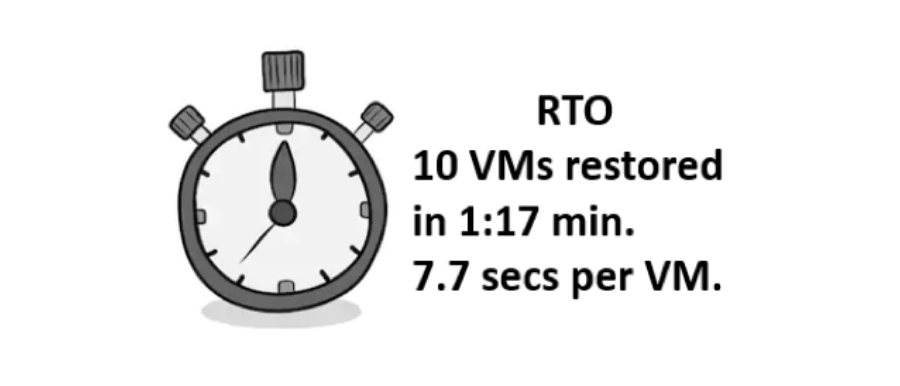
This post was authored by Dwayne Lessner Principal Technical Marketing Engineer Nutanix There is an old saying, “The devil is in the details”. If you have ever assumed something and then had to pay more, fix something or be left in a spot were what you bought wasn’t going to work, you have felt this pain. Late last year I wrote an article around the importance of Recovery Point Objectives (RPO) along with providing the Recovery Time Objectives (RTO). I wanted to share some more technical details of my on-premises lab cluster that I am using to connect to the Xi East Region. I want to prove Xi Leaps SLA around RTO while maintaining performance of your application when you do failover. Proven ResultsDuring my testing I was able to achieve: A restore time under 8 sec per VM The same virtual machine on-prem or in Xi could achieve the same performance, +600,000 transaction per minute Nutanix snapshots are efficient over the wire to Xi when creating VMs from the same image
Already have an account? Login
Enter your E-mail address. We'll send you an e-mail with instructions to reset your password.