Connect. Learn. Grow with the Nutanix Community.
Recently active
This post was authored by Dan Chilton Staff Core Performance Engineer, Nutanix Only have time for the summary? Recently released, Files 3.6 brings performance improvements that impact VDI and other critical workloads. These improvements include user desktop density increases and SMB encryption performance equivalent to non-encrypted SMB performance. Detailed performance numbers are updated in this Tech Note. Time for the full story? Here goes. . . Being from the United States and a child of the 80s, I have a love/hate relationship with owning cars. Expensive to own and operate, cars serve many important purposes for myself and my family. Here are the top three. Safely and securely transport my kids to school. Perhaps the most important task for my car. This is aided by many security features including turn signals, seat belts, airbags, and let’s not forget bumpers. Provide enough space to transport not only my immediate family but also close friends using the 3rd-row seats, which a
This post was authored by Michael Haigh, Technical Marketing Engineer, Nutanix Nutanix Calm is a multi-cloud application lifecycle manager, which means it allows you to model your applications in easy-to-consume blueprints, deploy those apps across a variety of on-prem and public clouds, and manage them throughout their entire lifecycle. Combine this functionality with a self service focused Marketplace, robust policy and governance, and showback, and Calm enables IT and Developers to quickly turn complex operations into a simple, one-click request. While in-depth knowledge of application blueprints is not required for the majority of Calm users, it is necessary for IT Operators and Developers who are looking to build custom blueprints from the ground up. This blog is aimed at those users who are looking to learn more about the objects within a Calm blueprint, and how they interact with one another. We’ll first walk through importing an example blueprint into your own Calm environmen
With each new release, Kubernetes becomes more powerful and complex to deploy and manage. As a result, enterprise organizations undertaking cloud native projects are compelled to seek out solutions such as Nutanix Karbon and Nirmata which can simplify the configuration, deployment, and management of on-prem Kubernetes clusters. Nutanix Karbon and the Nirmata Kubernetes cloud-based management plane are fully integrated, and can simplify cluster operations and workload management for all hybrid and multi-cloud use cases. Nirmata is the Kubernetes management plane designed for enterprise DevOps teams. It is delivered as a highly scalable and secure cloud service. Nirmata can manage multiple Karbon clusters, as well as Kubernetes clusters running on any cloud provider, via a single, unified management plane. Let’s take a look at 5 things Nirmata can do for your Nutanix Karbon clusters: Complete visibility into clusters - Get full visibility for cluster components and workloads with easy au
This post was authored by Yashesh Mankad Sr. Member of Technical Staff NutanixPostgreSQL is a powerful, open-source relational database system that is robust and reliable with a fully extensible architecture. It runs on all major operating systems and offers a number of add-ons that can transform a PostgreSQL instance into diverse applications like time-series databases, messaging queues, and so on.Due to Postgres’ strengths, it is a popular data persistence choice for complex applications, especially when considering open-source databases. Postgres can be deployed as a standalone instance or in the form of a cluster. Most serious deployments quickly hit limits of scale and availability with single-instance deployments. Postgres offers building blocks for high availability like replication, read replicas, single vs. multi-master master deployment, and so on. However, it does not offer a built-in solution for clustering and high availability. Nutanix database as a service (known as Nuta
Many of you already know X-ray as a valuable tool for measuring performance and resiliency on Nutanix. It’s always been built from the ground up with hyper-converged and cloud based platforms in mind and focuses on real world scenarios that you might encounter. For more background on why testing hyperconverged platforms with X-ray will give you the results that really matter see this excellent blog.This post was updated May 16, 2022X-ray 3.6 (coincidentally this was released alongside Files 3.6) introduced the capability to run I/O tests against an NFS file share. You can use this for stress-testing and sizing your Nutanix Files deployments. The Nutanix philosophy regarding X-ray has always been transparency above all else. In keeping with that tradition, X-ray doesn’t create the Fileserver or shares itself. We also leave the choice of fileserver configuration up to the user. The only new information that you need in order to run a test is the NFS fileserver hostname or IP and
This post was authored by Maksim Malygin, Global Solutions Architect NutanixAlmost every application that you are interacting with through the day, from your company’s CRM to the game that you are playing on your phone, and self-service POS at the grocery shop is supported by a database, either cloud-based, on-premises, and, possibly, delivered as a service. These databases are used by the applications to operate and process the data and directly impact how applications scale and perform; making database platform a keystone for business success. With the rapidly growing number of applications, the database market grows as well and is expected to reach USD 155.50 Billion by 2026 (link).At the same time, DBaaS (database-as-a-service) is shaking the way how databases are used by the developers, by removing the need for them to manage complex databases or deal with DBA and infrastructure teams so that they could focus on the application development instead. Let’s take a closer look at the
This post was authored by Michael Haigh, Technical Marketing Engineer NutanixCountless studies have shown that reducing the amount of time for developers to receive feedback on code changes improves software quality. Automating the build, test, and deployment of software with tools such as Jenkins is one of the best ways to accelerate software development. If you’re unfamiliar with Jenkins you can learn more on their website here.In this blog post, we’ll walk through deploying Jenkins onto Nutanix Karbon with a Helm chart. We’ll then configure an example GitHub repository for our code base. Each time we push our local code changes to our GitHub repo, a Jenkins pipeline will be initiated, which will build our new docker image, push that image to DockerHub, and automatically update the deployed application.CI/CD with Nutanix Karbon and JenkinsSince this will be a more involved post than usual, we’ll be breaking it up into a 3 part series. Stay tuned for the next posts in the coming
This post was authored by Michael Haigh, Technical Marketing Engineer NutanixIn our first post, we deployed Jenkins onto a Karbon Kubernetes cluster using a Helm chart, and configured GitHub and DockerHub to store application code and containers. In our second post, we added credentials to allow Jenkins to authenticate to the other tools, and created our Jenkins Pipeline. In this final post, we’ll be creating our Jenkinsfile, deploying our application, and finally updating our application through a single git push.Jenkinsfile and Yaml CreationBack in your workstation, use your favorite text editor to create a file called Jenkinsfile within the base hello-kubernetes/ directory. Copy the following contents into your file, but be sure to change the bolded items to your particular values (the IDs are from the credentials section of part 2):node { docker.withRegistry('', '93632a7f-bcab-4677-9e91-0aad2ebfb6ec') { git url: "https://your-internal-github.com/your-name/hello-kuberne
This post was authored by Michael Haigh, Technical Marketing Engineer NutanixIn our previous post, we deployed Jenkins onto a Nutanix Karbon Kubernetes cluster with Helm, configured a GitHub repository to store our application code, and configured a DockerHub repository to store our application containers. In this blog post, we’ll be configuring Jenkins, and creating our Jenkins Pipeline.Jenkins Credential CreationThe first step of our Jenkins Setup is to add our various credentials to Jenkins’ credential store, which gives Jenkins the ability to authenticate to other pieces of our pipeline. We’ll first add our DockerHub credentials, which allows Jenkins to push images. Depending on your GitHub settings, you may also need to add GitHub credentials, so we’ll walk through that. And finally, we’ll add our Karbon kubeconfig file to allow Jenkins to deploy our application directly onto our Kubernetes cluster.In the Jenkins UI, select Credentials along the left, and then the global domai
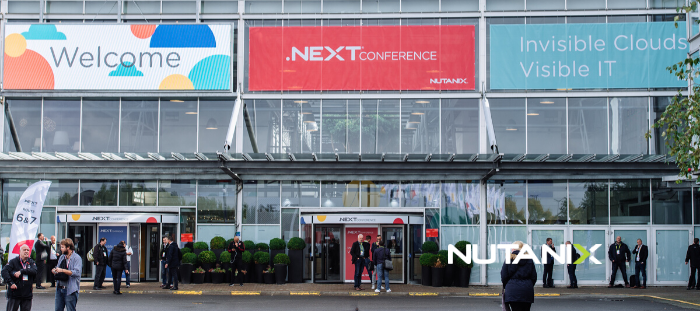
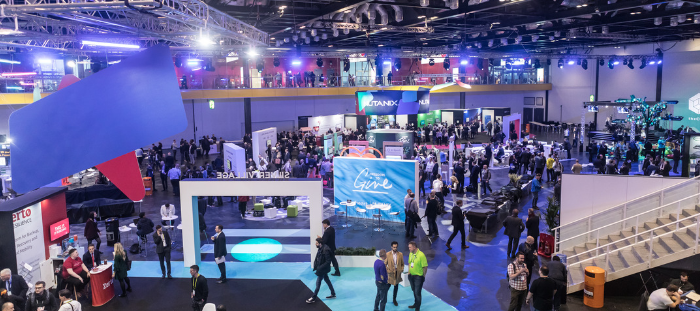
This post was authored by Sachin Chheda, Senior Director, Customer AdvocacyThank you, Copenhagen for playing host to our 2019 .NEXT Europe user conference in October. I know a few weeks have passed since the conference, but I had this feeling that I had to put in words--how fantastic it is to see the Nutanix community, the .NEXT conference (and our install base) grow. We have come a long way from the humble beginnings of several hundred attendees the inaugural .NEXT Europe in Vienna just a few years ago. The AC Bella Center in Copenhagen welcomed over 4,100 attendees—making it one of the largest gatherings of professionals focused on IT infrastructure and hybrid clouds in Europe.What struck me about this year’s conference was the fact that Nutanix has a lot in common with Copenhagen and Denmark. This became crystal clear on my ride to the airport. As I got talking with the taxi driver, he shared a surprisingly simple reason as to why his fellow Danes were so happy and satisfied. Denmar
This post was authored by Michael Haigh and Rahul Dabke, and co-hosted on D2IQ’s blog.Traditionally, deployment of stateful data services on Kubernetes was not easily managed and required manual intervention. Operators are powerful design patterns that help deploy stateful data services on Kubernetes and help developers with application lifecycle management, taking Kubernetes to the next level of orchestration. In order to create a production level operator, it is not uncommon to write tens of thousands of lines of code in the process. Writing, managing and implementing gobs of code has been cumbersome and often unforgiving.Writing an operator requires deep understanding of the underlying service in addition to a deep understanding of Kubernetes. Although there is commonality between two different data service operators, the need for managing different orchestration concerns commonly requires significant implementation differences. What is needed is a set of operators that are packaged
This post was authored by Gabe Contreras, Enterprise Architect NutanixWith many big data applications like Elasticsearch, one question that invariably comes up is “Why have RF2 at the Elasticsearch layer and still have to do RF2 at the Nutanix layer?”.There are many reasons operationally why you would want Elasticsearch on Nutanix, especially with AHV, rather than on bare metal. Those operational reasons such as not having application silos, leveraging spare compute and storage, having a single pane for all your workloads and supporting a single platform all lead to operational efficiencies, especially at scale. These help you turn your big data deployments into a private cloud for all applications and lets you use spare capacity for workloads such as extra compute to run kafka consumers and producers.There are also space saving features such as compression and EC-X on Nutanix. While Elasticsearch does have compression since it is contained per data node, Nutanix gets even more compr
This post was authored by Sarah Hernandez Member of Technical Staff - Prism UI It is no secret that automation has become a necessary part of IT Operations to ensure the success of your business. With automation comes with the benefits of reducing manual, repetitive tasks, minimizing human errors, and enabling IT teams to scale operations without needing to increase headcount. However, automation also introduces a new level of complexity with larger unknowns and risks. When you start letting the machine take actions without the proper intelligence, things can quickly spiral out of control. Teams are often reluctant to start automating tasks, due to the risk that they could spend more time debugging issues in the automation, than if they just did the tasks manually in the first place. Today there are many tools that offer ways to automate operations in the data center, but none of them are able to remove the complexity that can help alleviate the fears and risks of automating tasks
This post was authored by Tanuja Ingale, Sr. Product Manager for AHVOver the last few years, the Nutanix Enterprise Cloud OS platform has evolved by leaps and bounds in terms of platform robustness, simplicity in management and continuous innovation from storage and infrastructure level all the way up to multi-cloud multi-application management framework.Key features such as data resiliency, performance, scalability, and product maturity make Nutanix HCI a truly compelling and complete platform for running a wide-range of workloads. It simplifies deployment of enterprise-class applications and services running in bare-metal, virtualized or cloud-computing environments.Hyperconverged Infrastructure and Platform ScalabilityNutanix Enterprise Cloud is an integrated system that natively converges Compute, Storage, Networking and Virtualization, and is managed through a unified management interface of Prism. This hyperconvergence results in significant TCO savings, pay-as-you-grow scale-out
This post was authored by our friends at HYCUIt is amazing how fast the last year has gone by. Looks like we just were at London for .Next, but it’s now time for .Next in Copenhagen. All of us at HYCU are thrilled to see the amount of amazing innovation we have been able to deliver as part of our tightly-aligned partnership with Nutanix, and the strides we have been able to make in the multi-cloud journey.While we started with AHV in June 2017, we introduced ESX on Nutanix support at .Next in Nice. Since that time, we have added support for Nutanix Files, Nutanix CALM, non-Nutanix VMware, Nutanix Objects, Physical Servers, and P2V to just name a few. Since our journey began with AHV, many customers remember us as the best AHV backup solution. However, we have evolved into a full-fledged Enterprise Backup solution for Nutanix-led datacenters. The customers who continue to choose HYCU, have seen the simplicity with intelligence that we deliver, and fully experience the power of HYCU for
This post was authored by Lakshmi Kanthan, Fujitsu, Specialist Marketing ManagerFor customers who found the silos created by traditional infrastructure a barrier to change and progress, Fujitsu became a pioneer by introducing the first ever integrated system way back in 2002.Ever since, over the years, Fujitsu has built a reputation for excellence and reliability by implementing innumerous projects across different technologies including hyper-converged and cloud infrastructures.The building blocks from Fujitsu, which include PRIMERGY servers, are designed to offer maximum performance, energy efficiency, scalability and flexibility to meet various needs in this space.We introduced Nutanix Enterprise Cloud on PRIMERGY, an integrated system based on Nutanix software that we think is a huge boost to our hyper-converged and cloud capabilities. Nutanix is a pioneering, visionary organization in the hyper-converged infrastructure world. Even today, with the vast range of solutions in the mar
This post was authored by Russell Cozart, Senior Director, Product Management – CXD, CyxteraHyperconverged infrastructure (HCI) saves time and money as it rationalizes compute, storage and management costs, automates lifecycle management, enables nodes to be repurposed for new workloads. But with enterprises mandating cloud-first, justifying the upfront CapEx outlay and time to provision HCI and bare metal against the agility and OpEx model of public cloud can prove difficult.With public cloud, businesses avoid capital outlays and can rapidly deploy and scale as needed. There is no need for onsite data center staff and often there are no long-term contracts. But there are issues here. There is risk associated with lack of control of shared multi-tenant IT infrastructure. Some applications are just not ready or architected properly for the cloud and costs come into play too.While cloud may seem cost-effective at first, cloud bursting capabilities come at a premium, particularly for stea
This post was authored by Michael Cade, Senior Technologist in Veeam Nutanix Mine with Veeam was announced in Anaheim at the Americas version of Nutanix .NEXT. This integrated solution brings the highly-scalable and agile hyperconverged infrastructure of the Nutanix platform together with the enterprise‑class data Availability that comes with Veeam software. A turnkey solution that simplifies your data protection between on premises and cloud. A key differentiator of Veeam Backup & Replication is the benefit of choosing where and what you use for your backup compute and storage since agnostic and choice is very important. The ability to roll your own hardware and storage targets for your backups is great and works for some, but many also want to follow the hyperconverged methodology which brings an easy and simplified approach to where the data will reside. Nutanix Mine with Veeam brings this hyperconverged methodology but also allows scalability, the ability to scale up a
This post was authored by Laura Jordana Technical Marketing Engineer Nutanix In this digital age, we have grown accustomed to taking care of business with less paperwork. Gone are the days when you have to take hours out of your weekend to sort through your bills and pay them by check. Also gone are the days when the medical assistant at your doctor’s office has to locate your file in a physical file cabinet before you show up for your appointment. Now that so many things are digital, all that needs to be done is to set up auto-pay with your bank or bring up your healthcare record in the computer instantly when you arrive. All these documents, records, videos, images, and other data that has been digitized is a prime example of unstructured data. Unstructured data is drastically different than structured data that lives in databases and requires different management techniques to handle this data, especially as the growth of data explodes year over year. This shift in data managemen
This post was authored by Michael Haigh, Technical Marketing Engineer NutanixWhether you’re using traditional VM based infrastructure, or newer container based infrastructure, having a way to implement Role Based Access Control (RBAC) is absolutely critical. Implementing RBAC for your Nutanix Karbon Kubernetes clusters is straightforward once you understand Kubernetes RBAC authentication.The previous link has great information and resources, but to summarize, there are four main objects that are relevant:A Role grants access to Kubernetes resources in a single namespace. For instance, you might create a Role named pod-reader which only has read access to pods in the defaultnamespace. A ClusterRole grants access to Kubernetes resources cluster wide, irrespective of namespace. A RoleBinding ties the permissions granted via a Role to a specific user or set of users. So if you had a user named Paul who you wanted to give rights to read pods in a single namespace, you first create the pod
This post was authored by Saad Azam, EDU and Community Marketing Specialist. October is quickly approaching and we are excited to be hosting cloud builders from all over the world at the Bella Center located in Copenhagen for our .NEXT Europe Conference. .NEXT is the industry-leading technology conference where IT professionals gather to get a first look at the latest in enterprise cloud solutions, catch expert advice on constructing enterprise datacenters, and network with peers on the value that IT can bring to the business. Whether you’re just beginning your Nutanix journey or you’re an NTC (Nutanix Technology Champion), we’ve got content to help you add a Nutanix Certified Professional (NCP) certification to your resume — 60+ sessions ranging from AHV Introduction to highly technical deep-dives. Quick BreakdownAt the bottom of this post, we have identified how many of the sessions cover topics from the sections/objectives from the NCP exam! Here are a few highlights on how some
This post was authored by Yashesh Mankad, Nutanix Nutanix Era is a software suite which automates and simplifies database management. It offers Database as a Service capabilities right from newly provisioned databases to managing new as well as existing ones. It automates database life cycle management operations like backup and restore, patching, archiving and so on. It also offers the ability to create space efficient database copies, refresh and restore them to any point in time. Database AccessEnterprises typically have databases in the order of 100s if not more. This number goes up if we include related entities like standby or backup databases, retention policies, snapshots, etc. The ownership for these entities is spread across various business units in the enterprise and additionally over a wide variety of job functions like Infrastructure Admin, Database Admin, Developer and so on. In large enterprises, it is essential to control the level of access across users. For ins
This post was authored by Luke Congdon, Sr. Manager, Product Management for AHV Automatically put images on the clusters you need, before you need them How do you make an enterprise hypervisor in 2019? You make it dead simple. With our latest release of Prism, we’re doing exactly that for virtual machine disk image management. The Nutanix Prism Central management plane provides a highly-available repository for your images. These images may be guest OS ISOs or your application disk images, which are uploaded via Prism Central and stored on a cluster. In an active environment, these images are frequently used. Before the Prism Central 5.11 release, the image service ensured that uploaded images were saved to a cluster, and copied to additional clusters whenever you needed them, on-demand. As customers began managing higher numbers of clusters and needed those images on them, however, on-demand replication of images became too slow. If you had narrow network links to remote locations,
This post was authored by Harold Bell SaaS Content Marketing Manager Regardless of whether you support a small school or large enterprise, managing desktops, applications, and end-user data can be an utter nightmare. It’s inefficient. It’s expensive. And adding desktops can take a lot of time. Not to mention, managing and maintaining the environment is increasingly difficult. End-users, wherever they may be, need access to their apps and files to get their work done and be productive. At the same time, there is true pain in supporting these stakeholders. Cost, complexity, and competency can become real barriers to business success as managing desktops and users is hard for organizations. With that said, IT teams are increasingly turning to EUC for help. What is EUC you ask? Well that’s what this blog seeks to answer for you. As the title of the blog suggests, EUC stands for end-user computing. It’s a set of technologies used to deliver, manage, and secure the desktops, applications
This post was authored by Neil Ashworth Security Solutions Architect Nutanix What is it? Viruses, Malware, Spyware, Adware, Phishing, Vishing, Worms, Trojans, Infections, Exploits, Vulnerabilities, Hackers, and Crackers. An industry with such confusing terminology can be naturally repellent to many in I.T. especially those outside of infosec. Commonplace security terms can all sound a bit like gobbledygook and confusion leads to frustration and then in many cases to indifference. Even for those in the Security field, it can be difficult to keep abreast of the latest exploitation trends, but to almost everyone in the I.T. industry, Ransomware is a term known to all, a threat so ubiquitous it commands attention from even the most infosec apathetic of system administrators. There are many threats that exist in the digital age, where skilled digital opportunists lurking in darkened coffee shop corners, most likely wearing hoodies, laughing sinisterly over a small cupped espresso, poised
Already have an account? Login
Enter your E-mail address. We'll send you an e-mail with instructions to reset your password.