

100% of your VMs are back online. But your customers still cannot complete a single transaction.
How is that possible?
Imagine a Disaster Recovery test where:
✅ All protected VMs are successfully recovered.
✅ Nutanix Recovery Plan execution completes successfully.
✅ The infrastructure dashboard reports healthy VMs.
❌ The business application remains unavailable.
The infrastructure recovered. The business service did not.
This is a challenge that goes beyond replication technology and VM boot sequencing.
It raises a fundamental architecture question:
Did we design the recovery process around virtual machines or around business service dependencies?
1. The Scenario: Mobile Banking on Nutanix AHV
Consider a fictional banking environment with a Mobile Banking application consisting of:
-
Identity and DNS Services
-
Database Tier
-
Middleware and API Services
-
Application Servers
-
Load Balancers
-
External Payment and Authentication Integrations
During DR failover, the application VMs are started before the required database and authentication services are ready.
The result?
The virtual machines are running, but the application cannot process customer transactions.
VM Power-On ≠ Application Readiness ≠ Business Service Recovery.
2. Before Recovery Sequencing: Discover the Dependencies
The first challenge is understanding what the application actually depends on.
This requires more than a spreadsheet containing VM names and IP addresses.
For example, tools such as Device42 can assist architects through Application Dependency Mapping (ADM), including:
-
Discovering application-to-application and service-to-service relationships.
-
Identifying communication paths, protocols, and ports.
-
Visualizing upstream and downstream dependencies.
-
Mapping application components to supporting infrastructure.
-
Supporting impact analysis before infrastructure changes or migration.
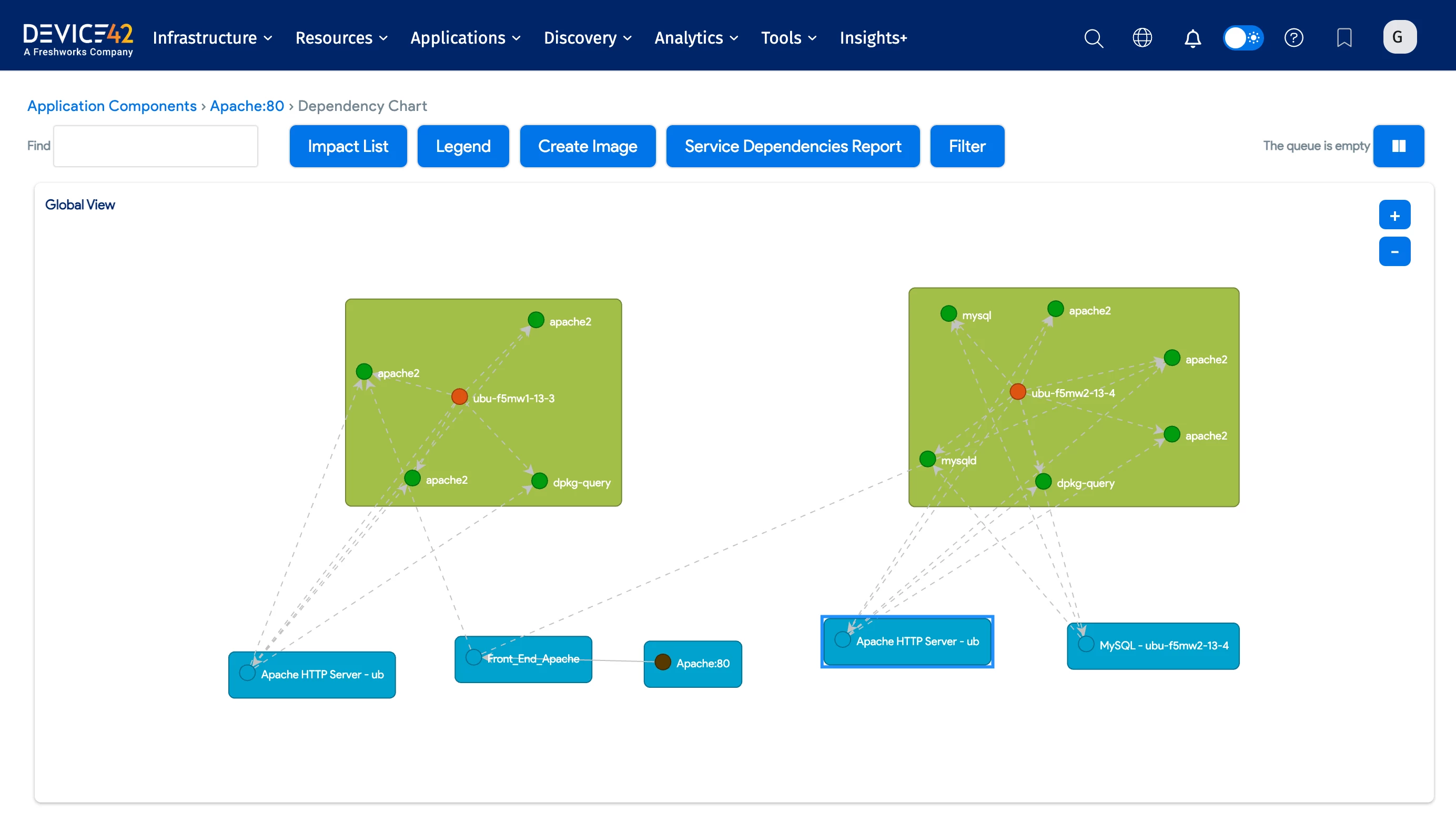
However, discovered connections should be reviewed with application owners. Observed network communication alone does not establish the correct recovery order or guarantee that all business-critical dependencies have been identified.
3. Connect Technical Dependencies to Business Requirements
Dependency discovery is only one part of the architecture.
We also need to understand which business services are critical, how long they can tolerate disruption, and what resources they require.
Business Continuity Management platforms such as Continuity2 MeridianBCMS can support this process through Business Impact Analysis (BIA), dependency documentation, and recovery planning.
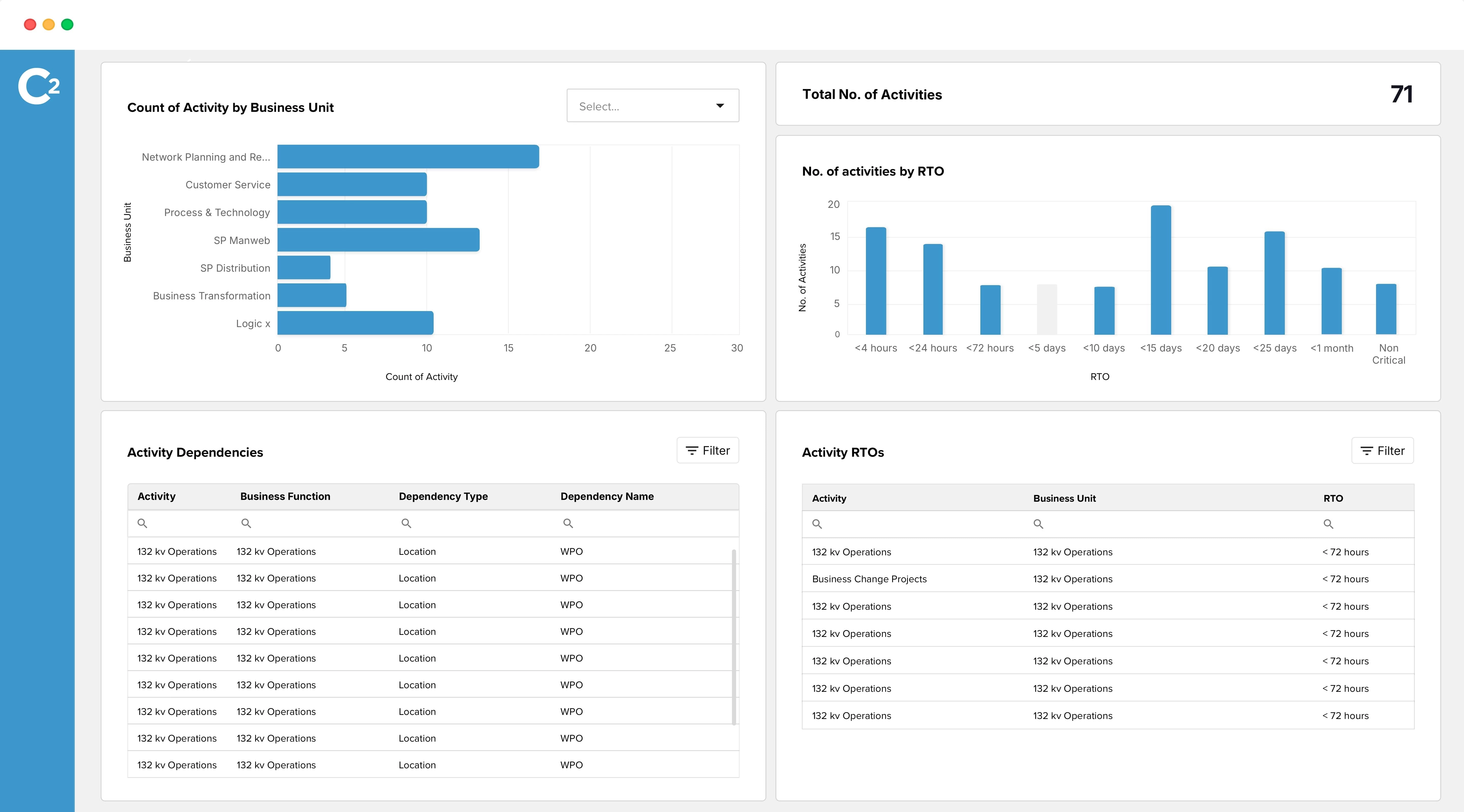
The distinction is important:
Device42 helps reveal technical relationships.
Continuity2 helps structure business continuity requirements and dependencies.
Together, these types of information can help the architect connect business priorities to technical recovery design.
These tools serve different purposes and are examples of capabilities rather than mandatory components of a Nutanix DR solution.
4. Translate Dependencies into Nutanix Recovery Plans
Once application dependencies are understood and validated, they can inform the recovery architecture.
For our fictional Mobile Banking application, a simplified sequence could be:
Stage 1 - Foundational Services
Recover or verify DNS, identity, networking, and other prerequisites.
Stage 2 - Database Services
Recover the required database components and validate availability, consistency, and connectivity.
Stage 3 - Middleware and APIs
Recover integration services after their prerequisites are operational.
Stage 4 - Application Tier
Recover application servers and verify backend communication.
Stage 5 - Business Service Validation
Validate load balancing, authentication, external connectivity, and critical banking transactions.
The sequence is illustrative. Some services may already be available at the DR site, while clustered databases and other application components may require specialized recovery procedures.
With Prism Central-based Nutanix Disaster Recovery, Recovery Plans support capabilities such as recovery stages, VM boot sequencing, network mappings, and supported script execution.
These can help implement the infrastructure recovery workflow.
But there is an important distinction:
Starting a database VM does not guarantee that the database service is ready.
Recovery stages must be designed with appropriate delays, supported automation, health checks, and validation procedures.
5. Measure the Recovery of the Business Service
For a business application with a 30-minute RTO, consider this hypothetical test:
| Recovery Activity | Elapsed Time |
|---|---|
| VMs powered on | 8 minutes |
| Database and middleware ready | 18 minutes |
| Application operational | 26 minutes |
| Critical business transaction validated | 34 minutes |
The virtual machines recovered within eight minutes.
But the end-to-end business service recovery took 34 minutes.
If the agreed RTO is measured to successful business transaction recovery, the 30-minute objective was missed.
This is why recovery success criteria must be established with business and application owners, not defined only by infrastructure operational status.
Architecture Takeaway
A practical DR design should connect four activities:
Business Impact Analysis → Application Dependency Mapping → Recovery Orchestration → Business Service Validation
The tools may differ from one organization to another, but the architectural principle remains the same.
We do not design Disaster Recovery simply to restore virtual machines. We design it to restore business services within agreed recovery objectives.
Community Discussion
For architects and engineers implementing Nutanix Disaster Recovery:
How do you discover and validate application dependencies before configuring Recovery Plans?
Do you use discovery tools such as Device42, existing CMDB relationships, application owner workshops, or a combination?
And how do you validate application readiness during recovery rather than relying solely on VM power-on status?
I'd be interested to learn how others approach dependency-driven DR architecture in practice.